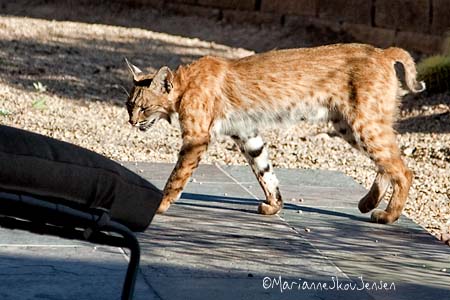
I had just put the cats in their KittyWalk enclosure and was watching the news when I noticed a Bobcat walk by the window. I ran to the door as I was worried that it might want to interact with Cleo and Cloe but he just glanced their way and then walked right past them. Whew!
All posts by Marianne Skov Jensen
leapin’ lizards
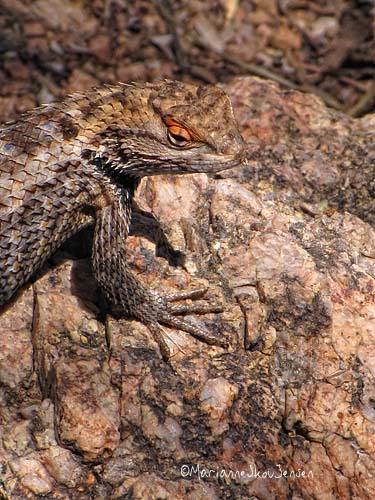
The cats are always happy to see the lizards come out. We have a catch and release rule here and since cats like to keep their prey alive so they can play with them for awhile, all lizards have survived so far. There was one exception a couple of years ago that I didn’t discover until the next day. If you have a strong stomach, click this link: Cleo breaks the rules 🙂
speaking of blooms….
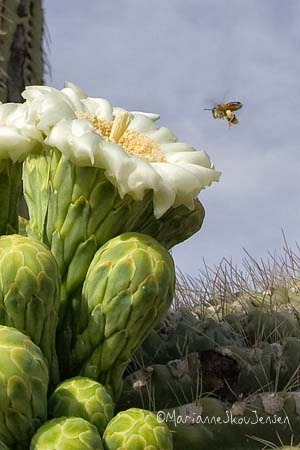
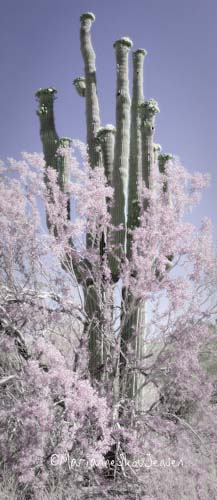
Besides the flowers I posted this week and the Ironwood trees, Saguaro Cactus are also blooming everywhere. White Wing Doves are the major pollinator of the Saguaro but Bees and Bats do a fair share too.
ironwood bloom time
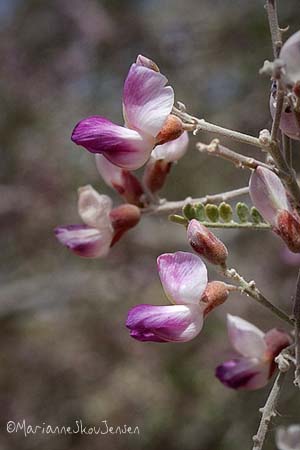
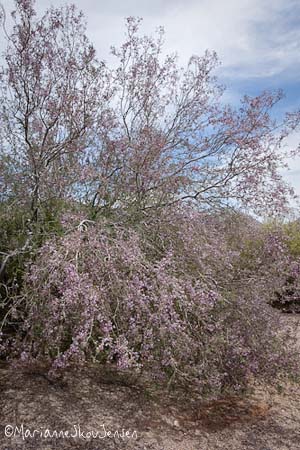
My friends Mary and Neal C. wanted me to tell them when the Ironwood (Olneya tesota) are blooming so I better give them a call because the show is great this year! The overall color of the tree in bloom is pale pink but the pea like blooms are actually purple, pink and white. The blooms remind me of Walt Disney. Can you hear them singing? 🙂
adonis blazingstar
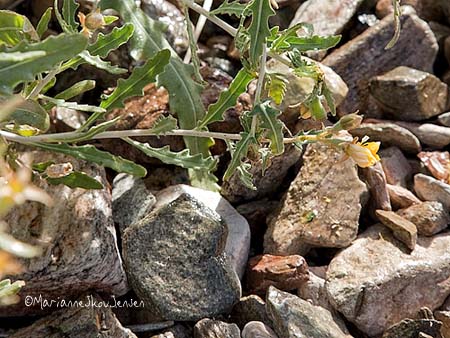
Adonis Blazingstar……how’s that for a name?! Latin name is Mentzelia multiflora and I first noticed it last month while hiking in the Quartz wash of the McDowell Sonoran Preserve. Blooms always get my attention but there weren’t any. Instead what caught my eye was a residue under the plant. Some of the lower leaves were shiny with it too. It looked as if someone had gone down the wash and deliberated sprayed something on each of them. I figured that was unlikely but hey….I’d never seen it before so maybe it was some kind of dangerous plant?!
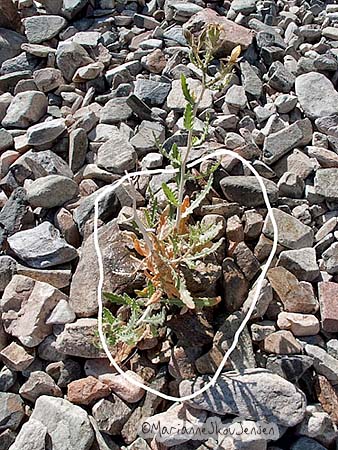
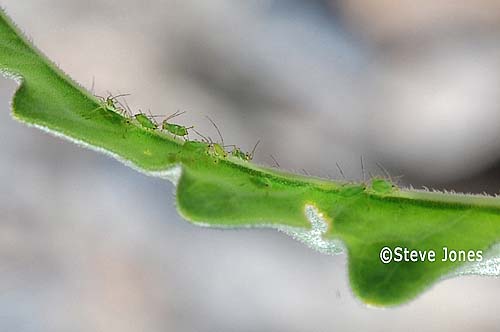
So I asked my botanist guru friend, Steve Jones, about it and he said “yea, I’ve noticed that residue too”. He said he’d check it out and keep me posted. Yesterday he went to an area to check out another plant I told him about (more later) and he came back with an answer to the residue question. A very cool answer in the form of the following photograph! The residue is called Honeydew aka Aphid poop 🙂
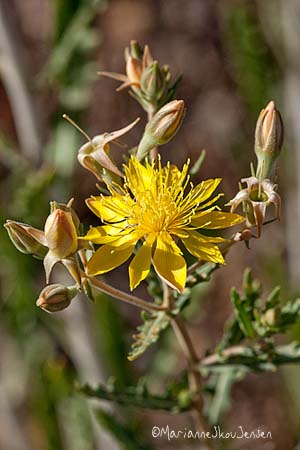
What does an Adonis blazingstar bloom look like? Because they bloom in low light, I didn’t see one until last week while hiking late in the afternoon. I look forward to seeing one with all those buds blooming at once!
As for the name of the plant….. the BlazingStar part is understandable but where did Adonis come from? I don’t have any links to back it up but I’ve come across a couple of instances that mention Mentzelia leaves being boiled up and used as a love potion. If anyone has facts, please share. Otherwise, that explanation works for me 🙂
dodder
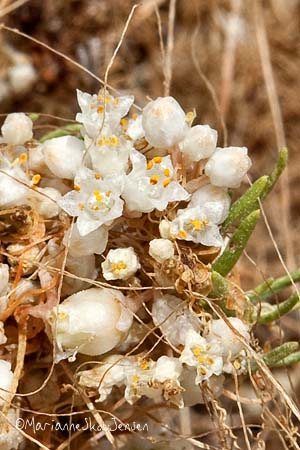
Strangle Weed is one of the old common names for Dodder (Cuscuta) and that describes its behavior perfectly. It is a parasite that kills whatever it takes over. It was interesting to find out that Cuscuta is a problem world wide.
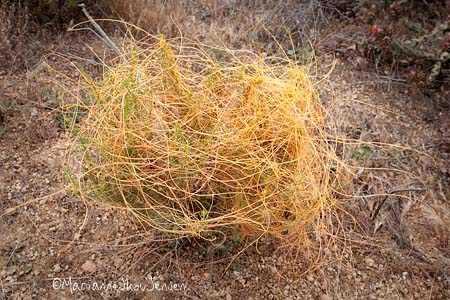
For those who wondered why I stopped suddenly as we were leaving our TT climb adventure last month, below is what I saw. It was the first time I’d seen Cuscuta blooming so it was pretty exciting….to me anyway 🙂
southwestern prickly poppy
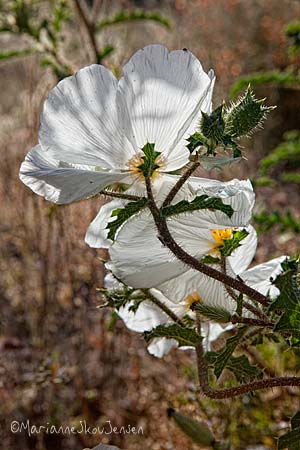
I took a few friends back out to Rackensack Canyon yesterday and one of the first things that captured our attention was the backlit Southwestern Prickly Poppy. Just gorgeous!
desert four o’clock
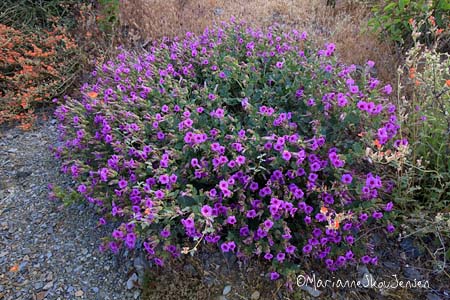
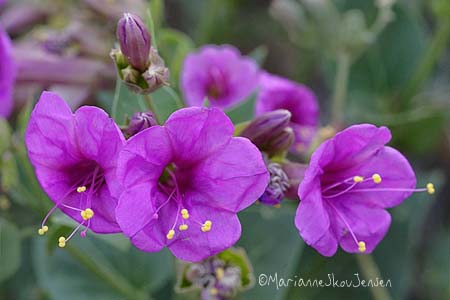
The McDowell Sonoran Preserve‘s desert flowers are typically very, very small so when you come across something like Mirabilis multiflora, it’s a real treat! This beauty has several common names so just pick one you like…..Colorado Four O’clock, Desert Four O’clock, Showy Four O’clock and more. The Preserve has many beautiful Four O’clock species but the Desert Four O’clock blooms are the largest I’ve seen so far. They bloom either very early in the morning or late in the afternoon (like Desert Wishbone bush) so unless you’re out hiking at those times, you’re not likely to see them in full bloom. This photo was taken yesterday afternoon at Rackensack Canyon but you can also see them in the higher elevations of the McDowell Sonoran Preserve such as on the new Toms Thumb Trail. We’ve spotted several popping up in the last few weeks on the North side trail. By this time next year, they could be as large as this specimen.
rackensack canyon
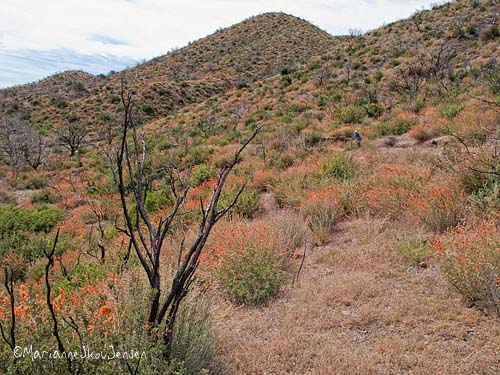
If you’re at all interested in photographing flowers, go to Rackensack Canyon in the next few days! The Canyon is thick with Globe Mallow for one thing….so much so that the hills looks orange. Nice! Next are the Prickly Poppies. I’m used to seeing only one or two, here and there but they are numerous in the canyon and full of bees. A real treat for those of us who love to capture them in flight. I saw at least 40 species of flora making it well worth a photographers time 🙂
picture in picture
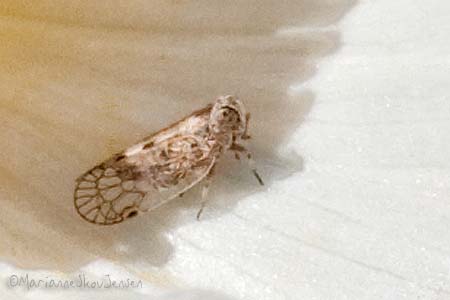
When shooting flowers, photographers often get a bonus of an insect they didn’t notice when they pressed the shutter. In the case of this photo, I was shooting an insect and got a bonus of another insect.
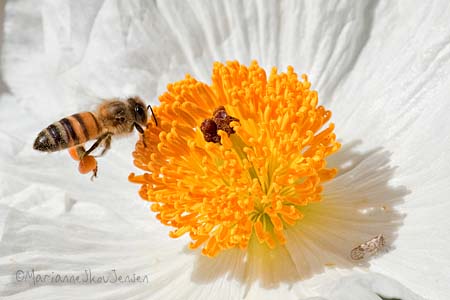
Look at the bottom right in the shadow. Is it a Butterfly or Moth? I might get a quick answer because yesterday, coincidentally, I gained some Lepidopterist friends when I went on a field trip with the Central Arizona Butterfly Association. Great group! I’m really looking forward to joining them on more adventures.